
After The Fall
On turning 70

We all know the feeling: that slow-motion experience when you happen to trip, lose your footing and begin to fall. The series of freeze-frame exposures when you feel yourself stumble.
The split-second moment when you try to catch yourself, before you crash headlong exactly where you hoped not to, humbled—perhaps bloodied and bruised. The thud, the lying on the ground, the painful tallying of the damage. Sometimes there are strangers to witness, offer help. Other times, there is no-one.
This time, there were no grownups—just a beloved toddler.
One happy morning in mid-May, I dressed my granddaughter in her leopard-print best, drove her to the theatre, and walked her across the street, arriving early for a 90-minute pantomime. Unquestionably, she was too young. Never mind, I thought. What could go wrong? The youthful infusion of joy, theatre, magic: life at its best.
Entering the theatre, we encountered our first obstacle: the stage was not elevated. No barriers: my granddaughter was free to wander on and off the so-called performance area—and she did.
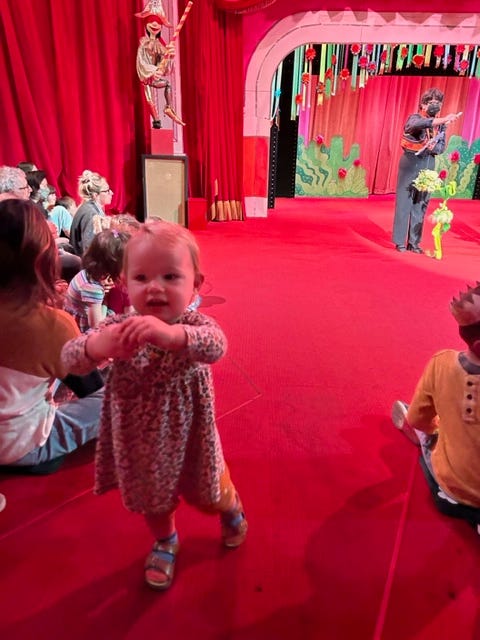
This bothered others. I struggled to hold her on my lap, to hug her close. But she is a curious, independent little girl, twenty-five pounds of pure will. When the lights went down and the puppets arrived, she wiggled and squirmed, struggling to get closer to the action.
When her favourite puppet took the stage—a small dog--she rushed straight to it. I whisked her away, distracting her with a sticker.
She reached her hand to hold mine as we headed to the car, sticker squished in the other.
We were both content, and exhausted. It was time for her nap. I craved some quiet.
As I placed my young granddaughter in her car seat, I noticed a complicated tree root under foot. Be careful, I thought.
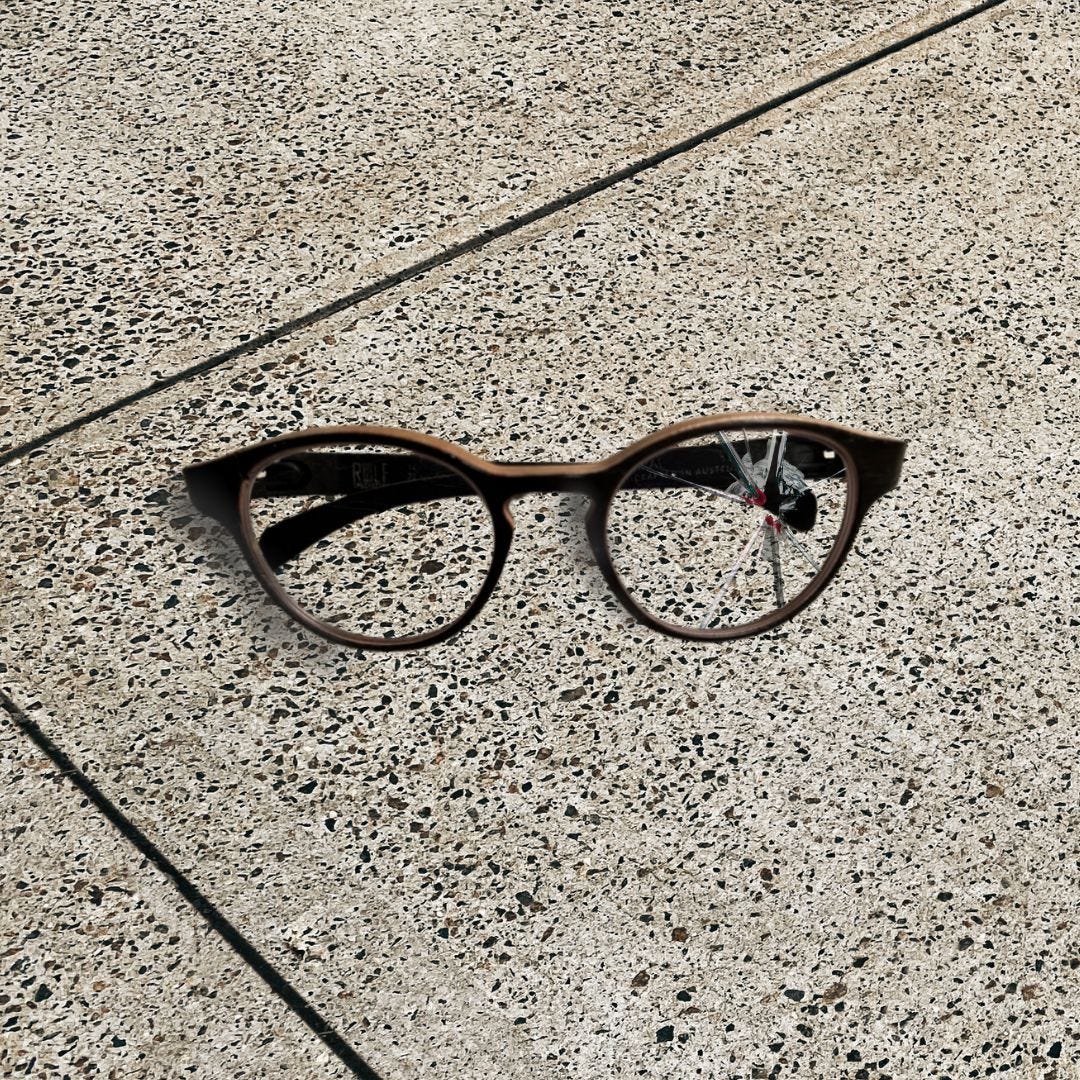
But stepping back, I forgot. I lost my balance: a slow-motion tumble, trying to grab something, anything. No such luck. I crashed face first into the car door, shattering my chic new wooden eye glasses. Flat on my nose, I reviewed the situation: a frightened granddaughter, a pounding knee, throbbing in my temples.
Was my nose broken? I hoped not. In my mouth, I tasted blood. Gingerly, I got up, hobbled to the driver’s seat and surveyed the damage in the car mirror. A red-faced, battered woman stared back at me, glasses askew, little lacerations across her face. I had aged 10 years.
I am no stranger to falling.
Far from it: I was born with a bum eye, and my depth perception has been pooched for as long as I can remember. As a baby, I had eye surgery, and was prescribed glasses.
In grade school, I wore a patch over one eye, a dubious distinction. My mother said I looked like a pirate; the bullies in the schoolyard thought otherwise. Catching a ball was impossible—still is.
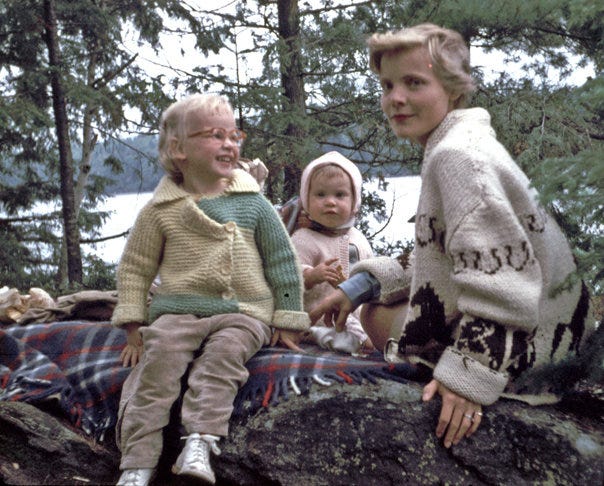
Today, my glasses have a prism, and I navigate daily life relatively well—I’m just more cautious than others, especially since my fall five years ago.
One minute I was sauntering down a sunny street in Tribeca, fresh latte in hand, all right with the world. Next, I was flat on my back, my toe having caught in a grate: three broken ankle bones, my foot facing sideways.
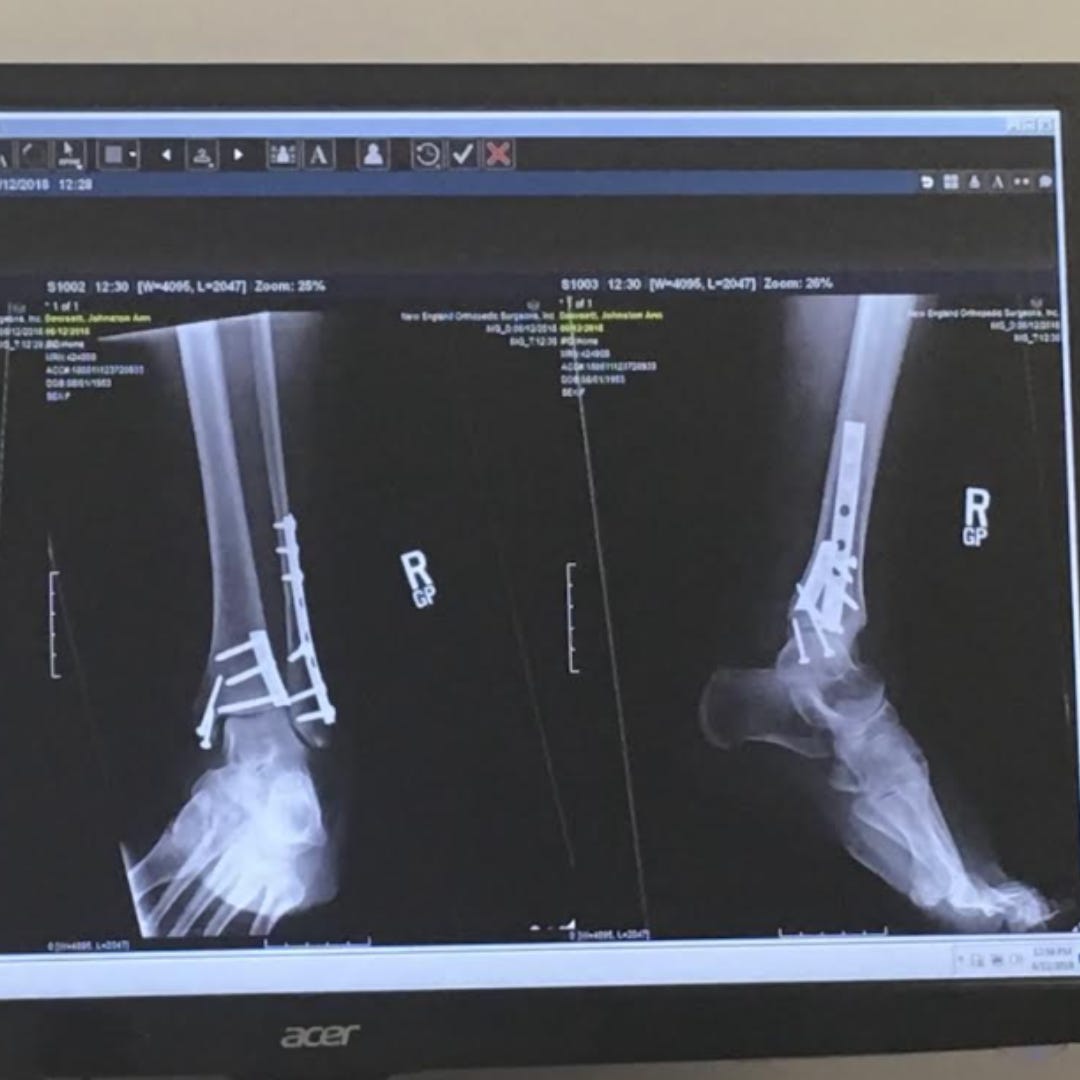
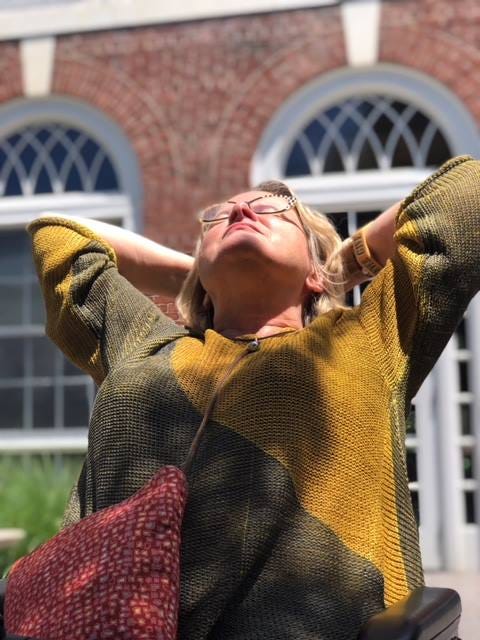
As the ambulance folks trundled my gurney into the hospital, I realized that my upcoming return to university--at age 64--would be done from a wheelchair.
The surgeon was encouraging: don’t cancel school, he said. Go. But with an ankle full of metal, how was I to navigate the campus, the residence, the cafeteria?
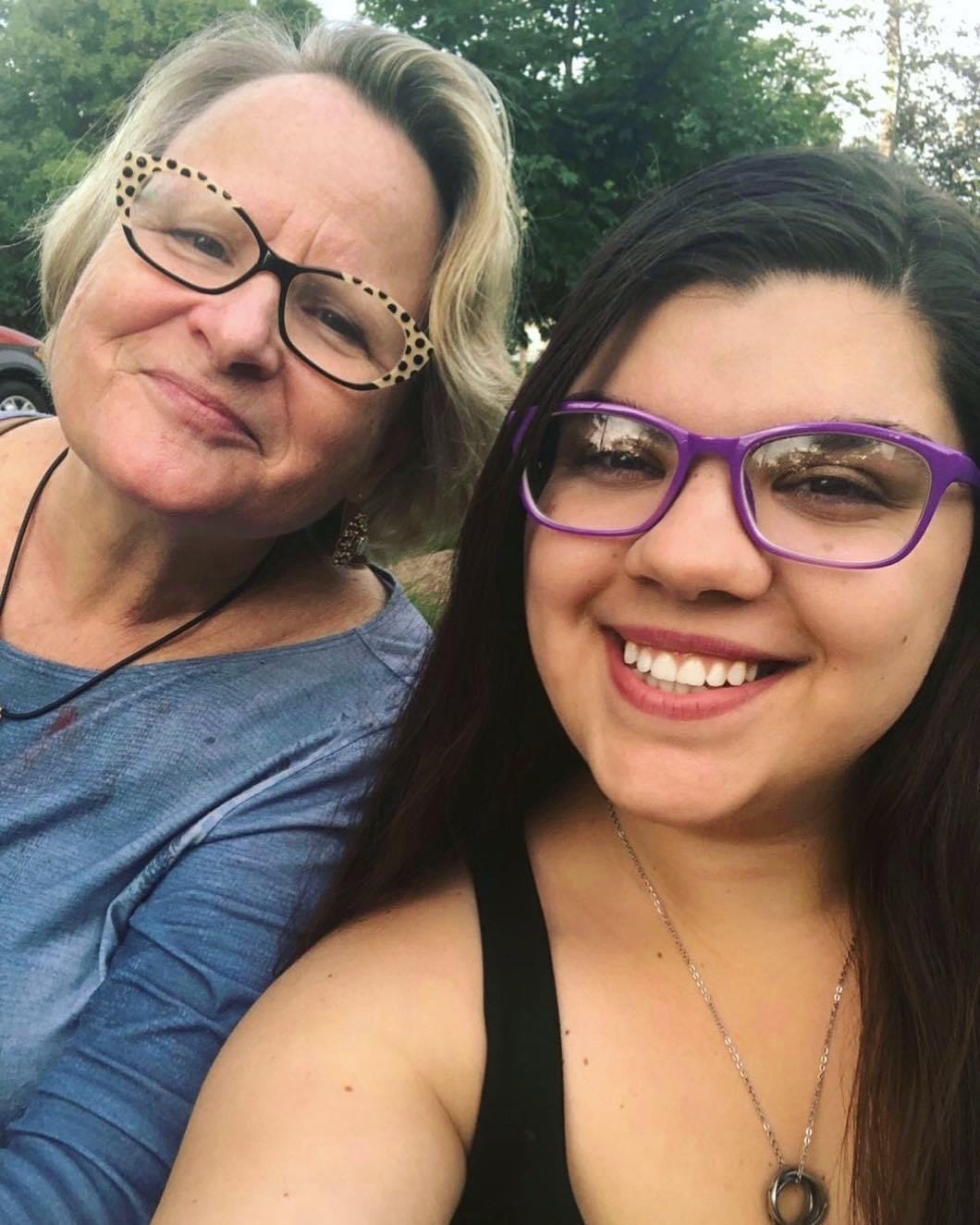
I hired a fellow student, a 23-year-old, to hold my tray at meal times, to set up my residence room for the wheelchair turning radius—hell, for just about everything but the toilet and the shower.
Weathering three months of daily challenges, we became close friends. “You’ve got this,” she would tell me, whether it referred to an awkward bathroom entrance or passing stats. And with her by my side, she was right.
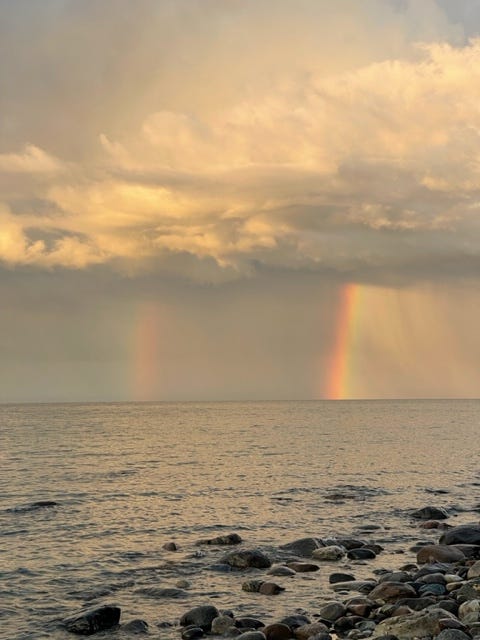
Poof, life changes in an instant. This is what I have learned. One summer night, a tornado hit the cottage. The top of a tree flew off and punctured the bedroom ceiling, the trunk protruding like a dagger in a Tarot card.
Life changes in an instant.
Two Junes ago, I was courted over coffee by a beautiful woman—a cross between Peter Pan and Tinker Bell. Day One, I said no: I don’t date women. Day Two, I said maybe. Day Three, I said yes. She intrigued me.
We fell in love. I flew to be with her, and together, we made big plans. But within the year, she shut us down.
It was Valentine’s Day when she told me it was over. You can’t make this stuff up. My friend tells me the love will turn into a lesson, and I know she is right. L always does. The closest I’ve come is Mary Oliver’s “The Uses of Sorrow”:
(In my sleep I dreamed this poem)
Someone I loved once gave me a box full of darkness.
It took me years to understand that this, too, was a gift.
Yes, life changes in an instant. As I teeter on the big tree root of my August birthday, my friends and I joke: 70 is the new 50. Most of us are avid walkers, or strength trainers, hikers or swimmers: we aim to thrive. But privately, we share stories of those with early dementia, cancer, Parkinson’s. We are not fools.
We just want to avoid a tumble, literally and metaphorically. So far, the script has been straightforward: go to college, fall in love, excel at something, raise your children, climb the ladder, shift to the empty nest, survive menopause.
Of course, none of it is neat and tidy--but that’s the script. And for each stage, there has been a manual or two, rule books.
But for this—turning 70—there are no rule books. Freedom 75? Play golf? Learn bridge? Knock off your bucket list before you yourself knocks off?
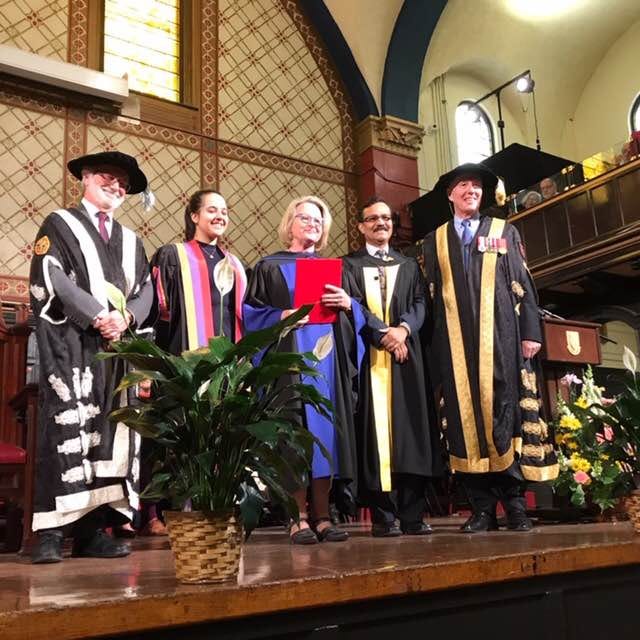
None of this applies to me. On my 65th birthday, I was sitting in a wood-panelled Ivy League classroom in Northampton, Mass, halfway through my second year of grad school. On my 66th, I was preparing for convocation, launching my fourth career, this time as a psychotherapist.
I was shopping for office space. Five minutes later, Covid struck and the world moved to Zoom. Life changes in an instant.
Or rather, it does and it doesn’t. Way back in the last century, I broke up with the kind man I was married to, the father of my five-year-old son. It was New Year’s, 1990, and I was determined to usher in major change with the new decade.
For 17 days, my broken-hearted husband sat in his car, outside the house, determine to change my mind.
My mind was firm. But I made a proposal: why don’t we keep our family as we lose our marriage?
And as the years unspooled, we did just that. Thirty-three years later, we are a family intact, travelling together, entwined. Neither of us has missed a Christmas with our son. We are best friends, confidantes. I can count on him and he can count on me.
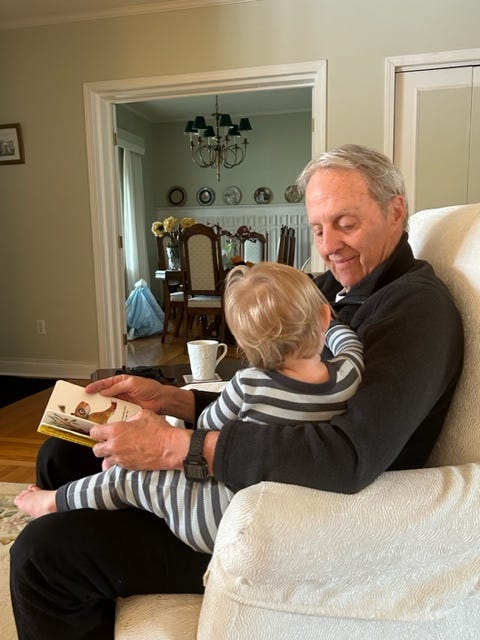
We make room for each other’s quirks, our differences. For instance, my ex-husband is determined to see 100, cheered by the fact that there are more centenarians than ever before.
My heart sinks: I cannot afford to live to 100. Meanwhile, my therapist, who encourages me to date again, warns me not to become a “nurse with a purse.” This sounds ominous too.
I was born in 1953, at the height of the Baby Boom, and this much I have learned: if I am going through it, odds are others are as well.
In other words, but for the late-stage career—and perhaps even then—I am average. My marriage was an average length—12.5 years. I am of average height. And indeed, when I developed a drinking problem, that was average too: in terms of risky drinking, women had begun to catch up to men.
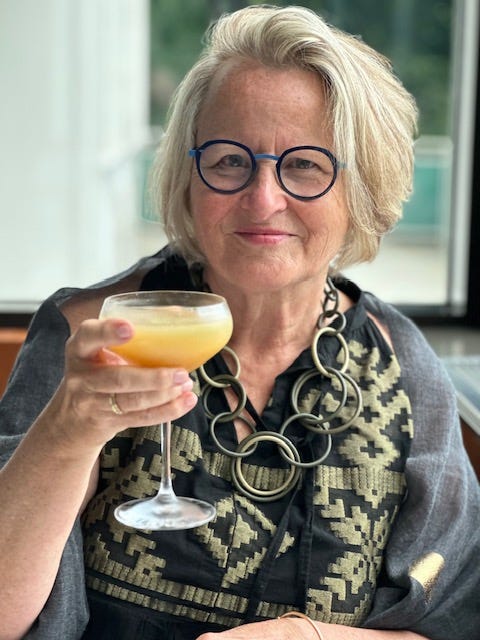
In my fifteenth year of sobriety, I see grocery shelves full of non-alcoholic options. No accident. If I am weathering it, odds are my peers are as well.
Today, I am turning my periscope on what it means to age. Two weeks ago, I Zoomed with a spry woman in her nineties, whip smart, who had sought me out, wanting to know how to intervene on her best friend’s chronic drinking problem.
Sitting in her crisp blue shirt, this woman confided that her friend’s drinking was more than she could handle. Made sense to me. She was worried her friend would drink and drive, killing herself and possibly others.
“Should I pour her wine?” The woman wanted to know.
We agreed it was problematic. It was risky, especially if her friend was driving, heading home alone. “She could trip and fall on the stairs,” I added. “Hit her head and die. Others have.” Life changes in an instant.
As I offered her advice, I found myself wanting to turn the tables.
I wanted to ask her: Could I spend just one afternoon, sitting on your flowered couch, under the massive abstract painting, listening to your unblinkered advice? Life changes in an instant, yes, and then what?
Without a lover, without a partner, how do you flourish?
Is it like sailing: you tug on one rope and adjust to the breeze? How do you wean off working? How do you survive the loss of a grown child? The loss of your friends. So many questions. And so I have am sending a series of emails to all the 90-year-olds I know. Stay tuned.
For the moment, left to my own devices, up at dawn with coffee and my beloved dog as ballast against my hip, I will presume this: we persist. Of course, we do.
We prevail. Time accordions out, and we find the courage to go on: with infirmities, with wrinkles, with metal in our ankles.
Children die, lovers leave or forget our names, and still we move forward. Every ending is ripe with new beginnings. This week, that ending means saying farewell to my sixties, a decade of change, and love and joy.
As I teeter on the tree root of my eighth decade, this is the spirited and simple question I want to ask: what comes next?
For the moment, especially this week as I celebrate with family and friends, I will remember the wisdom of Emily Dickinson:
“Forever is composed of nows.” I will savour the now.
Sylvia Plath too:
“Remember, remember:
this is now, and now,
And now.
Live it, cling to it.
I want to become
acutely aware
of all I’ve taken for granted.”
As I go forward, the subversive Charles Bukowski says it best:
“We are here
to laugh at the odds
and live our lives so well
that death will tremble
to take us.”
Amen, I say. Amen.
Do you know an exceptional woman who is aged 85 to 95, who would be willing to to be interviewed for my next book? If so, please email me at adjohnston@summerhill.tv
Join Ann’s memoir writing course, beginning Wednesday, October 4th.
Happy birthday Ann. I hope that your 8th decade brings you blessings in abundance and as few tree roots as possible. ✨❤️💐
Love the little you in glasses and the now you with a mocktail! Always trailblazing and brave enough to tell. Thank you and happy birthday!